
Home/Drainage and water problems
Residential · Drainage
Drainage and water problems
Standing water, a wet basement wall, a yard that will not dry out — solved by giving the water a route, not by adding topsoil and hoping.
What we do
Scope of work.
- Yard and lot drainage
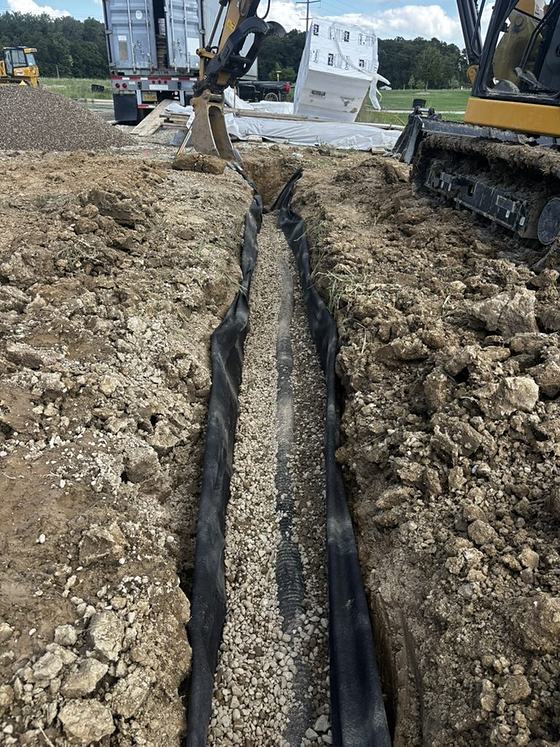
- French drain and drain tile
- Downspout and sump discharge lines
- Culvert and ditch work
- Regrading to establish positive fall
- Catch basins and surface inlets
• How we approach it
Water goes somewhere.
Pick where.
Most drainage problems are a grade problem wearing a disguise. Before anything gets installed it is worth working out where the water is coming from and where it can legally and physically go.
Questions
Drainage and water problems — FAQ
Why does my yard hold water after it rains?
Usually one of three things: there is no fall away from the area, there is a compacted or clay layer under the topsoil, or a downspout or neighbouring lot is putting more water there than the ground can take. Which one it is changes the fix entirely.
What is the difference between a French drain and drain tile?
In practice both mean perforated pipe in washed stone. What matters is depth, slope, the filter fabric and where the outlet goes. A drain with nowhere to discharge is just a buried trench.
Can you tie my downspouts and sump pump underground?
Yes, and it is often the single cheapest thing that fixes a wet foundation — as long as the discharge point is somewhere the water can actually leave.
Bid desk · plans + addenda